
Land Strategy
Sell the Land, Sign a Joint Venture, or Build It Yourself?
Outright sale, joint venture in real estate, or developing it yourself. What each route pays a Bangalore landowner, and how to choose.
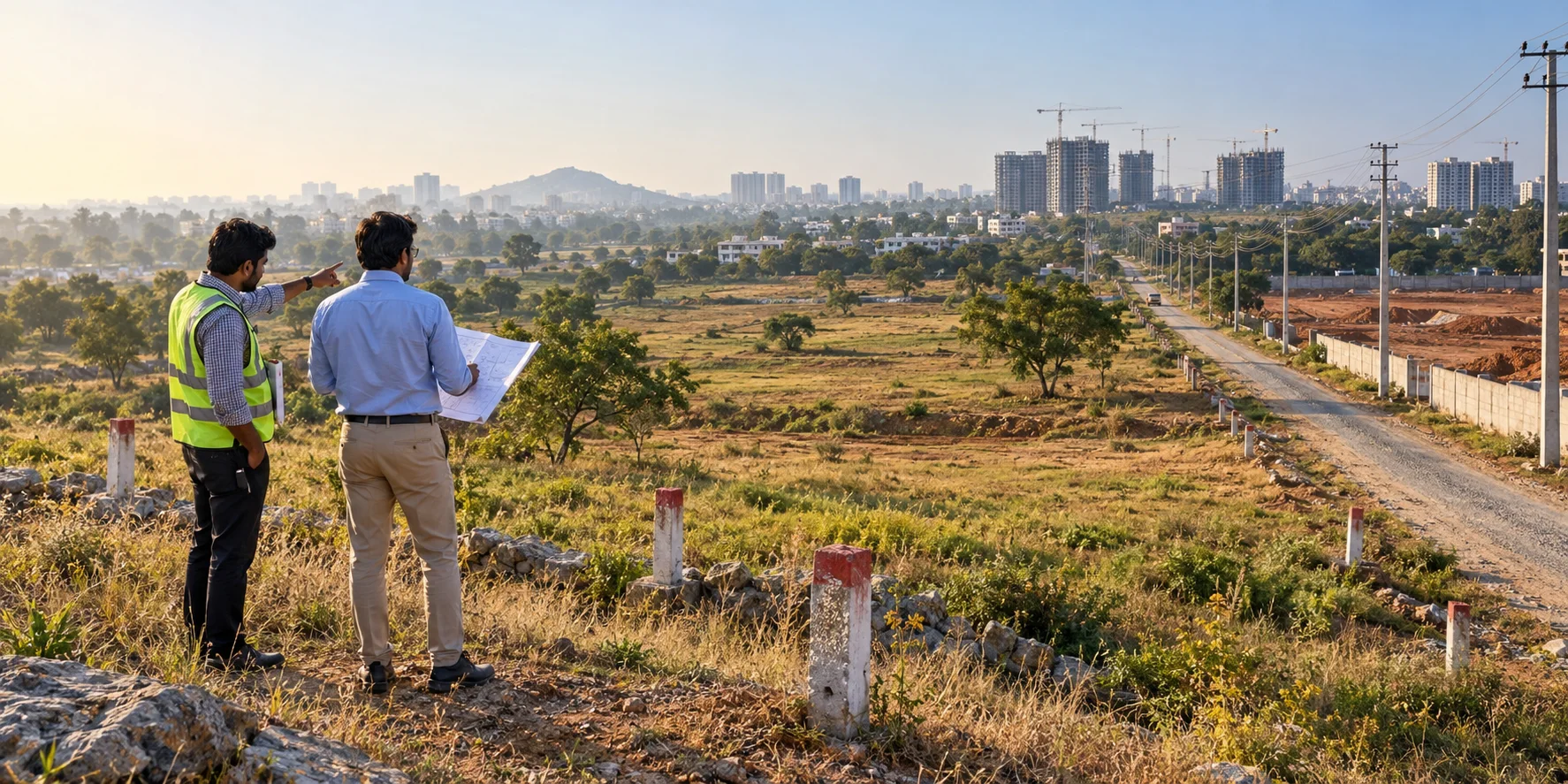
The call usually comes through a broker. A developer has seen your land, likes it, and has an offer ready. Sometimes it is a price per acre. Sometimes it is a ratio. Either way, you are being asked to say yes or no to one route before anyone has shown you the other two.
A landowner in Bengaluru has three ways to turn land into money: sell it outright, enter a joint venture with a developer, or develop it yourself. Which one is right depends on what the land can sell as, and just as much on you: how soon you need the money, how much risk you can carry, and whether you want to be in real estate for years to come.
The offer in front of you is one route out of three
Developers are looking. Cushman & Wakefield counted more than 880 land deals across 33 Indian cities between 2021 and March 2026, covering about 18,150 acres. Outright purchases accounted for about 10,900 of those acres, and joint ventures and joint developments for about 4,400. A developer who wants your land will frame the conversation around the structure that suits their own balance sheet: an outright purchase when they have capital and want full control, a joint venture when they would rather keep their cash for construction.
Neither is wrong. But a first offer is the start of a comparison, and you are entitled to the whole comparison before you answer.
The three routes, side by side
Selling outright buys certainty
An outright sale is the only route where the number is known on day one. You are paid, the risk moves to the buyer, and whatever the market does next year is somebody else's problem.
The cost of that certainty is the upside. The developer pays today's land value, then funds and builds the project and keeps whatever margin is left. If the corridor is about to change, with a road, a metro line or a large employer on the way, you may be selling just before the land does its best work.
Sell outright when the money has a job waiting for it, when the family needs a clean division, or when nobody at the table wants a second career. Do not sell outright only because it was the first offer.
A joint venture trades time for a bigger number
In a joint venture, you bring the land and the developer brings the capital, the approvals, the construction and usually the sales. The two of you divide the result. In Bengaluru the arrangement is more often called a joint development, and the division comes in two forms. In an area share, you receive a fixed share of the finished plots or homes. In a revenue share, the developer sells everything and you receive a fixed share of what is collected.
The reason to do it is that your share should be worth more than the land would have fetched outright. That premium is your payment for waiting and for carrying risk. Your land is now tied to one developer's ability to get approvals, finish on time and sell at the price everyone assumed. If the project stalls, so does your money.
Most of the outcome is decided by commercial terms settled before signing: the ratio, the share model, who sets the price and who does the selling. For choosing a route, the point is simpler. A joint venture ties you to one developer for several years. Choose them the way you would choose a business partner.
Developing it yourself keeps all of the upside and all of the work
The third route is the one landowners either dismiss too quickly or embrace too quickly.
A plotted layout is the realistic version. You fund the approvals and the development work, form the roads and the parks, and sell plots under your own name. Nobody takes a share. Whatever the buyer pays above your cost is yours.
So is every problem. You carry the approvals, the contractor, the cash flow before the first booking and a sales operation you have never run. The landowners who do this well treat it as starting a company. They bring in help where they have no experience: a planner for the layout, a lawyer for the paperwork, and a sales and marketing partner for everything between the product decision and the last registration.
Three questions decide the route
Put the ratio and the per-acre figure aside for a moment and answer these honestly.
- How soon do you need the money? If the answer is within a year, an outright sale is the route most likely to deliver. The other two pay over several years, and schedules slip.
- How much can you afford to have go wrong? If this land is most of the family's wealth, tying it to one project and one developer is a large bet. If it is one holding among several, you can afford to wait for the bigger number.
- Do you want to be in real estate? A joint venture keeps you involved in a project for years. Developing it yourself makes you a developer. Some families find they like it. Others find they have signed up for years of meetings.
Whichever route you take, the price comes from the buyer
Every figure in every route is worked backward from one thing: what a buyer will pay for the finished plot or home on your land, and how quickly. The land price is derived from it. So is the ratio. So is the revenue you would earn by building it yourself.
That is not a number to guess at in 2026. Across India's eight largest housing markets, launches have run ahead of sales for sixteen quarters in a row, according to Knight Frank, which also points to premium stock building up in Bengaluru. Buyers have plenty to compare. A project built on an optimistic price will disappoint on all three routes: a sale that struggles to close at the agreed price, a joint venture that sells slower than the model, or a layout of your own with plots left over.
So before you choose a route, find out what your land can honestly sell as, to whom, and at what price. Terray's promise to landowners, on its About page, includes "an honest answer early, including the ones that may be difficult to hear." Ask for that from whoever advises you.
One caution. The three routes are taxed and documented differently. Settle both with a chartered accountant and a lawyer before you commit to anything. This article covers the commercial choice only.
Questions landowners ask
What does JV mean in real estate?
JV stands for joint venture. A JV in real estate usually describes a landowner and a developer coming together on one project, with the landowner contributing the land and the developer contributing capital and execution. It is used interchangeably with joint development, though the legal structures can differ. A lawyer should confirm which one you are signing.
Is a joint venture better than selling land outright?
It can pay more, because you share in the value of the finished project and not only in today's land value. It also takes years, and ties your return to the developer's execution and to the market. An outright sale is better when you need certainty or speed.
Can a landowner develop land without a developer?
Yes, with the same approvals and registration any developer needs. It also takes capital for the development work, professional help with planning and legal matters, and a sales operation. The owner keeps the full upside and carries the full risk.
When should a landowner speak to a sales and marketing partner?
Before choosing a route. The value of every route depends on what the land can sell as, and at what price. A partner who studies the market first can tell you that while the decision is still open.
If you are holding an offer and are not sure it is the right route, bring it to Terray before you answer. Start a conversation.
No jargon. We promise.
Questions, answered plainly


Contact Our Team
Let's get started with a brief intro call.
Do you prefer whatsapp communication?
JV stands for joint venture. A JV in real estate usually describes a landowner and a developer coming together on one project, with the landowner contributing the land and the developer contributing capital and execution. It is used interchangeably with joint development, though the legal structures can differ. A lawyer should confirm which one you are signing.